
Quick answer: Happyo is an online audio hypnotherapy program that its seller markets for procrastination, stress and frustration. It may suit people who like guided audio and want a low-cost daily routine, but results vary and there is no guarantee it will work. If procrastination comes with ongoing anxiety, low mood or attention problems, talk to a doctor or mental health professional first.
This guide is general product information, not medical or mental health advice. Talk to a doctor or other qualified professional about ongoing anxiety, low mood, attention problems or other health concerns.
Why procrastination is so hard to shake
Procrastination is more than being lazy once in a while. Tasks pile up until the avoidance itself becomes a source of stress: people often describe waking up dreading their to-do list and going to bed blaming themselves for not finishing it. Over time, that can wear down confidence.
The costs usually show up in three areas:
- Lost time: plans get swallowed by “just five more minutes” or “let me check my phone first,” important tasks are pushed to the last minute, and late nights follow.
- Growing emotional debt: tension, shame and guilt tend to loop, so even time spent working feels stressful because of “I really should have started earlier.”
- Missed opportunities: delayed projects, applications and decisions can cost promotions, collaborations and personal milestones.
A few common examples show how this plays out:
Example 1 — Work
A report that could be finished steadily over several weeks gets left until the final days. The rushed result needs more revisions, deadlines slip and clients or colleagues lose confidence. Often the hardest part isn’t finishing — it’s getting started.
Example 2 — Relationships
Promises to help friends get canceled at the last minute or dragged out until others step in. Repeated often enough, it makes a person look unreliable, and trust wears away gradually.
Example 3 — Health and finances
“I’ll go to the dentist / work out / sort out the bills tomorrow” can lead to worse dental problems, unused gym memberships and late fees. Small delays add up to real costs.
What Happyo is (according to the seller)
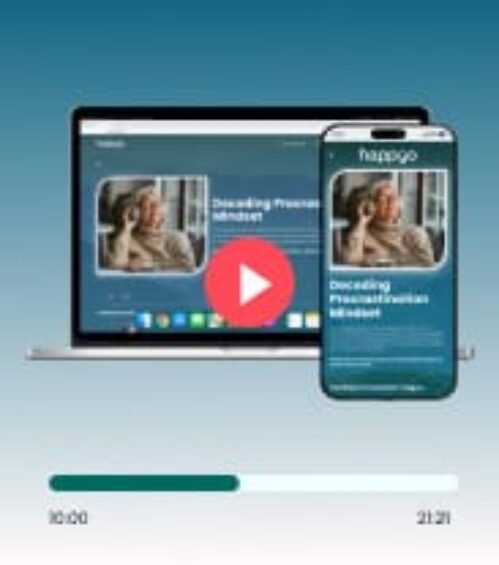
Happyo hypnotherapy program for procrastination
Happyo is sold online as an audio hypnotherapy program. According to the seller, it uses guided hypnosis audio and exercises aimed at reducing the resistance many people feel before starting a task. You listen at home, ideally with headphones. At the time of writing it was listed at $29.99 (down from $129.99); check the checkout page for whether that is a one-time payment or a subscription, and for the refund terms.
Hypnotherapy for habits like procrastination is not well studied, and experiences shared online vary widely. Think of a program like this as a structured relaxation and focus routine rather than a cure. It is not a substitute for professional help: if procrastination is tied to anxiety, low mood or attention problems, a doctor or licensed therapist can discuss evidence-based options with you.
How to use an audio program like this
If you decide to try it, a consistent routine gives it the fairest chance. These general tips apply to most guided-audio programs:
Fixed daily time: For example, right after waking up in the morning or just before bed at night. Listen when you’re alert and in a quiet environment, consistently every day.
Headphones on, distractions off: Pick a quiet spot, keep your phone on silent and try not to be interrupted for the whole session.
Follow the “Immediate Action” rule: Right after the audio, set a “2-minute task” — even just writing down the first step of a to-do — and start right away. The key is to minimize the resistance to starting.
Record and reward: Track small wins every day, even if it’s just completing a tiny step of a task you’ve been avoiding. Accumulated small wins gradually turn motivation into habit.
A realistic way to judge progress:
- First sessions: Notice whether you feel calmer and whether starting one small task feels easier afterwards.
- Week 1: Look at how often you actually start tasks, not whether everything gets done.
- Week 2: Check whether you can keep a longer task moving over consecutive days without last-minute rushes.
- Week 4: If nothing has changed after a month of regular use, the program probably isn’t the right fit; check the refund terms and consider other approaches.
Realistic expectations
No audio program will end procrastination for good. The most you can reasonably hope for is that starting feels a little easier and that you have a routine to return to when you slip.
Habits that help, with or without a program:
- Set interim deadlines: Splitting a project into dated milestones stops work from piling up at the end.
- Break tasks into small steps: Turn “I want to do this” into “let’s do just one small step first,” which makes complex tasks feel less intimidating.
- Write down commitments: Keep a list of what you’ve promised others and by when, so it doesn’t slip.
- Plan tomorrow tonight: A short written plan can make it easier to stop worrying about unfinished to-dos in the evening.
The key point: there is no instant fix. Lasting change usually comes from rebuilding habits through daily micro-actions that lower the cost of getting started. At best, a program like Happyo can serve as a routine that kicks off that process, not a replacement for it.
Who might try it, and when to see a professional
Happyo may be worth a look if you’ve already tried Pomodoro timers, to-do lists and planning apps, you like guided audio, and you’re comfortable paying for a program with limited evidence behind it. It asks for regular listening time plus a commitment to take one small action afterward.
It may suit people who:
- Have tried common productivity methods but still struggle to get started;
- Enjoy guided meditation or relaxation audio;
- Want a gentle routine rather than a strict system.
When to talk to a professional: persistent procrastination is sometimes linked to anxiety, depression or ADHD. If it comes with constant worry, low mood or trouble concentrating across many areas of life, or it’s seriously affecting your work or relationships, talk to a doctor or mental health professional. No product can diagnose or treat these conditions, and results with any self-help program vary from person to person.
Related guides
Some product links in this guide are affiliate links. If you buy through them, Fivoraco may earn a commission at no extra cost to you.